All models
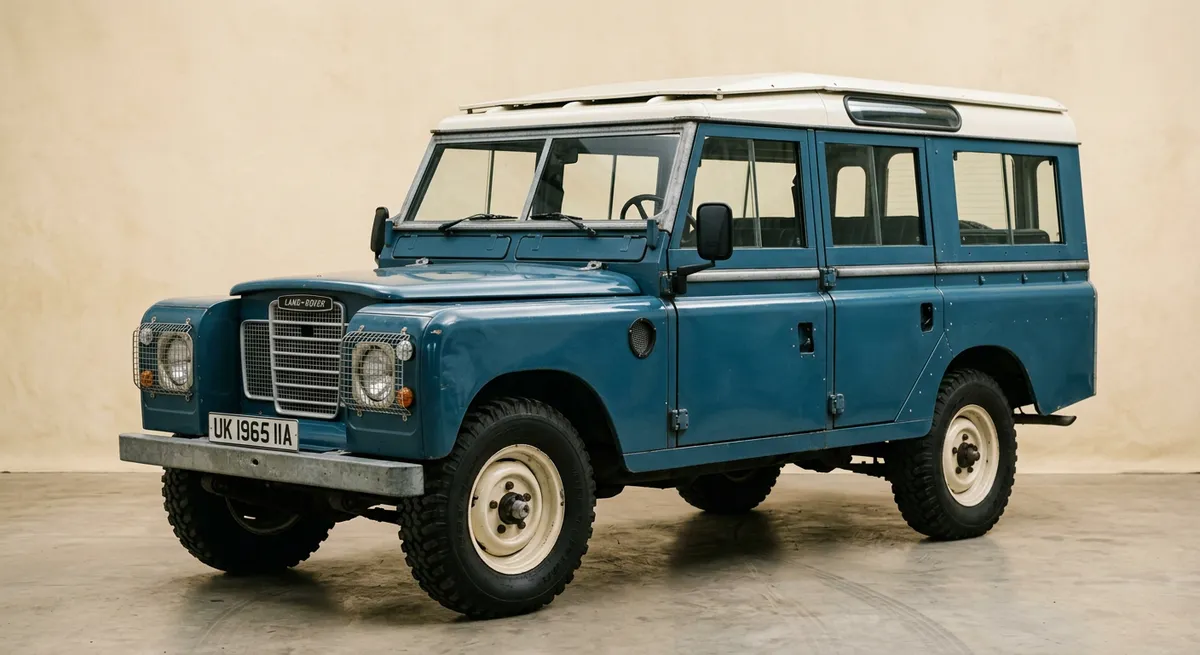
Series IIA
Series IIA
The most produced Series model of its time and the classic expedition Land Rover. A 2.25 litre diesel arrived at launch, the 2.6 litre six followed in 1967, and headlamps moved into the wings from 1969.
- Released
- 1961
- Ended
- 1971
Full technical specification
Figures are typical for the model range and vary by year, engine, body style and market.
Engine
- Type
- 2.25 L petrol, 2.25 L diesel, 2.6 L 6-cylinder IOE petrol (109" only)
- Displacement
- 2,286 cc / 2,286 cc / 2,625 cc
- Power
- 77 bhp / 62 bhp / 83 bhp
- Torque
- 124 lb ft / 103 lb ft / 128 lb ft
- Fuel system
- Solex or Zenith carburettor / CAV injection
Transmission & drive
- Gearbox
- 4-speed manual, synchromesh on 3rd and 4th
- Transfer box
- 2-speed, high and low range
- 4WD system
- Selectable 4WD, optional Fairey overdrive
- Final drive
- 4.7 : 1
Chassis & running gear
- Frame
- Welded box-section steel ladder chassis
- Body
- Birmabright aluminium alloy panels on steel bulkhead
- Front suspension
- Semi-elliptic leaf springs, telescopic dampers
- Rear suspension
- Semi-elliptic leaf springs, telescopic dampers
- Axles
- Live beam axles, Rover Salisbury rear on later 109s
- Brakes
- Hydraulic drums, servo assisted on 6-cylinder
- Steering
- Recirculating ball
Dimensions & capacities
- Wheelbase
- 88 in (2,235 mm) / 109 in (2,769 mm)
- Length
- 142.4 in (88"), 175 in (109")
- Width
- 66 in (1,676 mm)
- Kerb weight
- Approx. 1,370 kg (88"), 1,590 kg (109" SW)
- Payload
- Approx. 590 kg (88"), 840 kg (109")
- Fuel tank
- 10 gal (88"), 16 gal (109")
- Tyres
- 6.00 x 16 / 7.50 x 16
Performance
- Top speed
- Approx. 60 - 70 mph
- Fuel economy
- Approx. 14 - 22 mpg
Production
- Built at
- Solihull, England, plus CKD assembly worldwide
- Units
- Approx. 280,000
- Notable
- Headlamps moved into wings from 1969 (export, then all markets)
- Body styles
- Soft top, Hard top, Pick-up, 7 & 12-seat Station Wagon